


 Cart
Cart
 sales@molnova.com



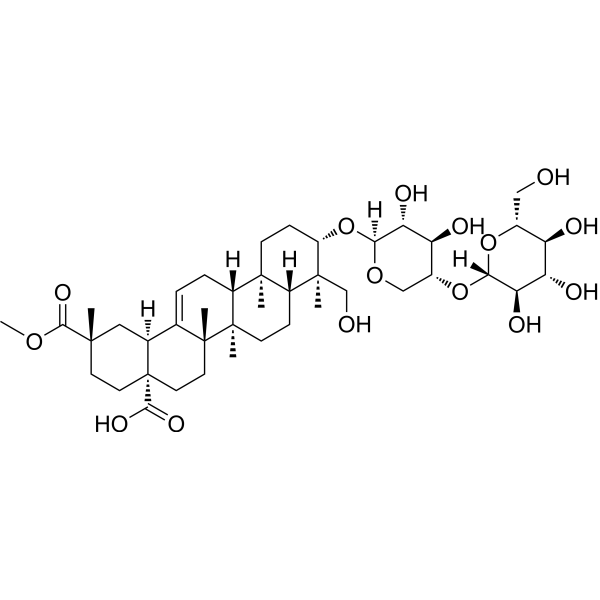
Esculentoside C
CAS No. 65931-92-2
Esculentoside C( —— )
Catalog No. M30913 CAS No. 65931-92-2
Esculentoside C exerts proinflammatory effects synergistically, it can induce inflammatory stimulation.
Purity : >98% (HPLC)
 COA
Datasheet
HNMR
HPLC
MSDS
Handing Instructions
COA
Datasheet
HNMR
HPLC
MSDS
Handing Instructions
| Size | Price / USD | Stock | Quantity |
| 5MG | 567 | In Stock |


|
| 50MG | Get Quote | In Stock |
|
| 100MG | Get Quote | In Stock |
|
Biological Information
-
Product NameEsculentoside C
-
NoteResearch use only, not for human use.
-
Brief DescriptionEsculentoside C exerts proinflammatory effects synergistically, it can induce inflammatory stimulation.
-
DescriptionEsculentoside C exerts proinflammatory effects synergistically, it can induce inflammatory stimulation.
-
In Vitro——
-
In Vivo——
-
Synonyms——
-
PathwayOthers
-
TargetOther Targets
-
Recptor——
-
Research Area——
-
Indication——
Chemical Information
-
CAS Number65931-92-2
-
Formula Weight810.97
-
Molecular FormulaC42H66O15
-
Purity>98% (HPLC)
-
Solubility——
-
SMILES——
-
Chemical Name——
Shipping & Storage Information
-
Storage(-20℃)
-
ShippingWith Ice Pack
-
Stability≥ 2 years
Reference



-
Gefitinib analog III
Gefitinib analog III(4-((3-Chloro-4-fluorophenyl)amino)-7-methoxyquinazolin-6-yl acetate) has potential anti-inflammatory and anti-tumor activity and can be used to study its interactions and activity in organisms.
-
Adrenocorticotropic ...
Adrenocorticotropic Hormone (ACTH) (1-39), rat is a potent melanocortin 2 (MC2) receptor agonist.Peptide fragments of ACTH (1-39) were formed during in vitro incubation of the peptide with membrane preparations. ACTH (1-39) were isolated by high pressure liquid chromatography, and peptide fragments of ACTH (1-39) characterized by determination of amino acid composition and NH2- terminal residue.
-
JPH203 dihydrochlori...
JPH203 dihydrochloride is a tyrosine analog, acts as a selective inhibitor of L-type amino acid transporter 1 (LAT1), and is used in cancer research.
